
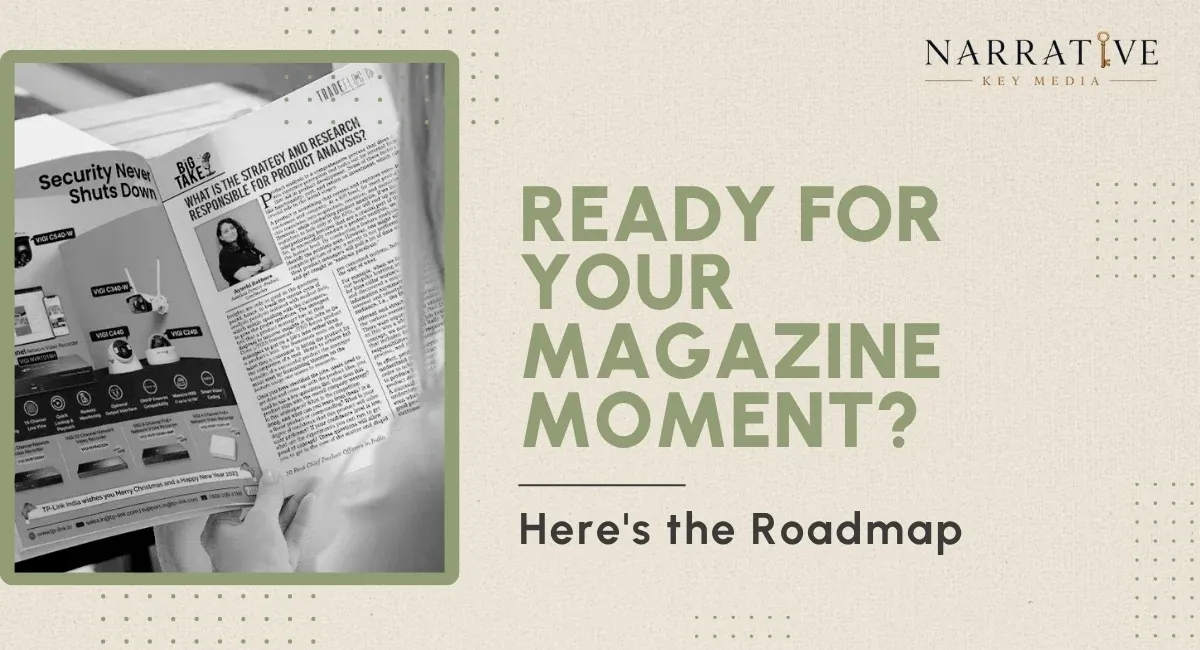
The famous American artist and leader of the pop art movement, Andy Warhol, said that everyone will get fame for 15 minutes in the future. Now, like everyone else, you must be wondering when your 15 minutes will come. Well, today we have many ways to get famous, but getting magazine placement is not that easy. What matters is getting your brand placed at the right time, in the right place.
This is why magazine placement has become a big deal for businesses of all sizes. Whether you are a startup or a well-established business, getting featured in a magazine can bring a lot of credibility to your business.
Today, we will break down a step-by-step guide on how you can get your business featured in the magazine.
Why Magazine Placement Actually Matters?
Let’s put it simply- people do not trust the ads the way they used to. Trust plays a role in 88% of buying decisions, and most consumers need to trust a brand before they’ll actually buy from it. Trust doesn’t come from a banner ad, but comes from third-party validation, which means someone apart from you mentioning your brand.
This is where magazine placement comes in and adds value to your business. People trust third-party endorsement more than paid advertisement. When your business gets placed in a magazine, people aren’t looking for the sales pitch; however, they are looking for an outside source vouching for you.
Not All Coverage Is Created Equal
Before you chase magazine placement blindly, it’s important to know which format actually works best. Research on media credibility found that dedicated editorial features rank highest in consumer trust, ahead of guest contributions, interview mentions and listicle inclusions. In simple terms — a proper article written about your business will help you fall in a “Top 10” list, every time.
A guest article written by your executive still builds strong trust. In fact, 60% of B2B decision-makers state that high-quality thought leadership directly makes a brand look credible, as noted by Edelman B2B Insights. This means contributor pieces are definitely worth your time, even if a full third-party editorial is not an option yet.
The Process of Getting Featured in a Business Magazine
So how does this actually work in practice? Let’s use Tradeflock, a popular business magazine, as a real-world example of how the process typically unfolds:
- Research first: Before pitching anywhere, understand the magazine’s audience, tone and the kind of stories it usually runs.
- Find the right angle: Magazines don’t want “we sell great products.” They want a story – your founder journey, a bold industry take, or a problem you solved that others are facing too.
- Pitch it properly: Reach out through the magazine’s submission process with a short, compelling pitch. Keep it tight and lead with the story, not your resume.
- Submit your feature or interview: Once accepted, you’ll typically go through an interview, a written feature, or a contributed article — depending on what fits.
- Have your assets ready: Logo, headshots, quotes and a short company bio speed things up massively.
- Follow up, don’t ghost: Editors are busy. A polite follow-up after a week or two keeps your pitch alive without being annoying.
- Leverage it once published: This is the step most businesses skip. Share the magazine feature everywhere — your website, LinkedIn, email signature, press page. A single feature can multiply in value.
This is honestly how most solid magazine placement opportunities happen, not through luck, but through a clear, repeatable process.
A Few Quick Tips
- Always lead with a story, not a sales pitch.
- Have your website and socials polished before you pitch.
- Personalise every pitch, generic emails get ignored.
- Don’t expect overnight results media relationships take time.
- Consider a PR partner if you’re short on media contacts.
What Are the Takeaways?
At the end of the day, magazine placement isn’t just a vanity metric — it’s a trust-building tool that pays off in ways ads simply can’t match. Start small, be consistent, tell a real story, and the bigger opportunities will follow. Every well-known brand you admire today started with its very first feature somewhere too.
Big-name publications rarely pick up a business with zero media history. They look for founders who already have coverage, credibility, and proof that a journalist somewhere thought the story mattered. That’s why smart brands start with accessible business magazines, build a track record of features, and then pitch upward.
Building relationships with journalists, joining contributor platforms, applying for industry awards, and working with a PR partner all help too. Earned media, on average, delivers about three times the impact of paid media for every dollar spent, which is exactly why bigger magazine placement is worth the patience it takes to earn it.
FAQs:
1. Does Magazine Placement Cost Money?
Some magazines charge for sponsored features or advertorials, while others offer free editorial coverage based purely on newsworthiness. These are fundamentally different in terms of credibility, paid features should always be disclosed as sponsored content, and they carry less weight than independently earned editorial coverage.
2. How Long Does It Take To Get Featured?
It usually takes a few weeks to a couple of months, depending on the magazine and how fast you respond.
3. Can A Small Business Get Magazine Placement?
Yes, absolutely. Many magazines love covering small businesses with interesting stories, especially local or niche publications.
4. Do I Need A PR Agency For Magazine Placement?
Not always. You can pitch yourself directly, but a PR agency helps if you lack media contacts or time.